IMAN PROGRAMS

Organizing and Advocacy

Our Organizing & Advocacy department is committed to mobile diverse communities around issues directly affecting individuals and families in the inner-city, as broadly informed by past and present social movements and struggles.


Alliances & Partners

IMAN’s organizing work is often supported by and uplifted by a growing network of community based, citywide and national partnerships and alliances. Our collaborative efforts help to strengthen resources and establish comprehensive community-organizing.

Local (Chicago Lawn and Englewood)

  • Bahar Center
  • Beth Shalom
  • Greater Southwest Development Corporation
  • Growing Home
  • Holy Cross Hospital
  • Imagine Englewood If…
  • Resident Association of Greater Englewood (RAGE)
  • St. Rita Church
  • Southwest Organizing Project (SWOP)
  • Sanad
  • Teamwork Englewood

Citywide

  • United Congress of Community & Religious Organizations (UCCRO)
  • Grassroots Alliance for Police Accountability (GAPA)
  • Chicago Equal Voice Network (CEVN)
  • Communities Partnering for Peace (CP4P)

National

  • Muslim Power Building Project
  • Faith in Action
  • Muslim Anti-Racism Collaborative
  • MPower Change

Partners


Criminal Justice Reform

IMAN organizers and community members continue to amend state legislation and ease some restrictions placed upon returning citizens. According to human right watch, black/white racial disparity in sentencing for non-violent low drug offenders in Illinois is 57 to 1, making it the most exaggerated such disparity in the nation.


According to human right watch, black/white racial disparity in sentencing for non-violent low drug offenders in Illinois is 57 to 1, making it the most exaggerated such disparity in the nation.

If African Americans are 57 times more likely to be incarcerated for a non-violent low-level drug offense they are 57 times more likely to end up with a criminal record that drives them back to the very vulnerable and fragile communities that many of them came from and were incarcerated in the first place. More startlingly than that is the fact that out of the 15,000 men and women that return each year, more than half of them recidivate: meaning they commit another crime in an already unsafe and vulnerable community. Those of us at IMAN have been working at a ground and policy level confronting this issue for over five years.

Since its inception, IMAN has actively confronted issues of criminal justice reform through its Project Restore program.

Ending Recidivism through Policy: the SMART Act

The SMART Act establishes health clinics and drug schools focusing on diversion and recovery for low-level offenders. These services will enable low-level offenders to receive free medical screenings, drug diversion education, job training, and on-going support to maintain a healthy and drug-free lifestyle. Additionally, the program aims to ease the legal burden on low-level offenders by dismissing their cases upon successful completion.

IMAN leaders attended educational seminars, traveled to Springfield for advocacy, and some actually drafted the legislation of the SMART Act. Our efforts to curb the flow of re-incarceration and recidivism for low-level offenders as an active leader of the Developing Justice Coalition (DJC) have been awarded with the passage of this Act by the Illinois State Congress. However, we still need support in obtaining the Governor’s approval and securing the financial commitment of the State Appropriations Committee for funding this program.


Location: Atlanta

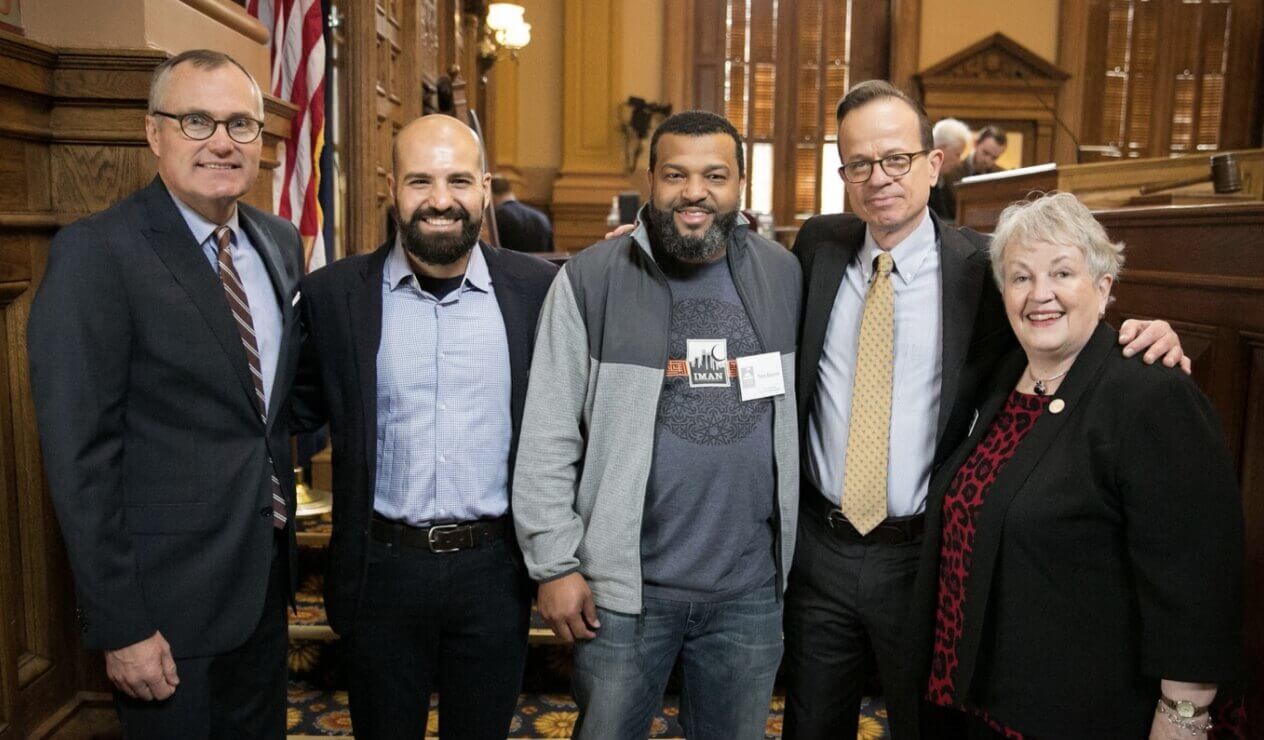
IMAN Atlanta has partnered with Georgia Justice Project with their Second Chances for GA campaign to expand expungement laws in Georgia, a state with one of the most restrictive expungement laws. SB288 or the “Second Chance” bill achieved a huge win recently having passed both the Georgia House and Senate.


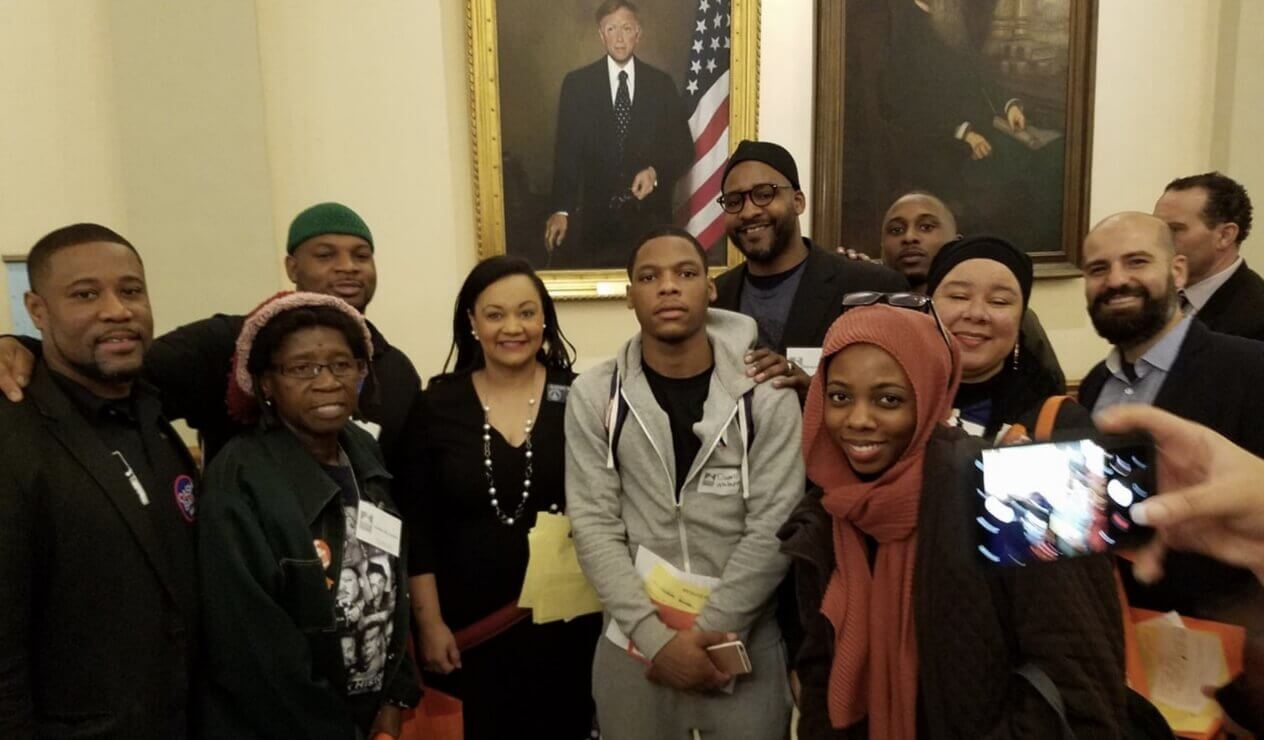
IMAN Atlanta staff and community leaders show strong support with presence at the State Capitol during advocacy days.

Additionally, staff and leaders have turned up at the Capitol to advocate for raising the age of juveniles to be charged as adults, ending cash bail, investing in proper mental health treatment for incarcerated individuals, and reforming solitary confinement practices.

Leadership Development


Deeply rooted in spiritual tradition and broadly informed by past and present social movements and struggles

IMAN is heavily invested in developing leaders who are either directly affected by or deeply invested in issues that impact the lives of inner-city communities in Chicago, Atlanta, and across the country.

IMAN has developed its own unique community organizing curriculum that is both deeply rooted in spiritual tradition and broadly informed by past and present social movements and struggles.
Leadership Development Training

IMAN’s organizing training curriculum focuses on fundamentals in community organizing, including power, self-interest, relationships, leaders, and other core concepts.

IMAN’s Two-Day Community Organizing Training draws from traditional community organizing concepts and strategies, highlighting the importance of sharing our stories and histories, conducting relational meetings and identifying one another\’s stake in an issue, and understanding how leaders can affect change around social issues.

Muslim Power Building Project

In collaboration with our partners at Faith in Action (formerly Pico National Network), Muslim Anti-Racism Collaborative, and MPower Change, IMAN has developed a training curriculum to train new and emerging American Muslim organizers around fundamentals in community organizing. IMAN organizers are among the cohort of # of trainers who train MPBP participants who are based across the country.

IMAN has partnered with Faith in Action, LA Voice, MPower Change, and the Muslim Anti-Racism Collaborative (MuslimARC) to launch the Muslim Power Building Project. This historic initiative harnesses the strengths and resources of these organizations to establish a comprehensive community-organizing and leadership development program for Muslims nationwide.


Police Accountability

IMAN, alongside several partnered community organizations, was integral in helping pass the Empowering Communities for Public Safety Ordinance (ECPS), the most transformative police oversight ordinance in our country’s history.

It directly led to the development of the District Council position, allowing civilians the opportunity to manage police oversight.


Policy Updates

IMAN’s latest legislative push was formalized in March 2018 as Senate Bill 3489, nicknamed the Path to Restoration Bill. This crucial bill proposes a set of amendments to Illinois Child Murderer and Violent Offender Against Youth Registry Act, under which men and women convicted of a violent crime against a youth or the murder of an adult must register for a period ranging from ten years up to natural life.

The “Path to Restoration” Bill will create a fairer, more transparent system, allowing individuals to amend incorrect information and appeal their inclusion in the database. It proposes an opportunity to reconcile returning citizens with victims and their families and to help restore the dignity stripped from so many in this process.

IMAN has secured bill sponsorships from State Senators Kimberly Lightford, Elgie Sims and Jackie Collins. The team, led by Organizer Nasir Blackwell and Staff Attorney/Organizer Aaron Siebert-Llera, will be mainstays in Springfield as they pursue additional legislative support. If the bill is signed into law, Illinois would become the first state in the nation to create a mechanism whereby a member of a violent registry can seek removal from the database.

Illinois Senate Bill 2282, otherwise known as the Removing Invisible Bars Bill, was signed into law in July 2016. A substantial portion of admissions to Illinois Department of Corrections (IDOC) are individuals on Mandatory Supervised Release who have violated their release conditions. These are known as “technical violations”. These conditions incarcerate individuals within their communities, even though they are no longer inside prison cells. During the fiscal year of 2014, over 11,000 parolees were returned to prison—8295 were from technical violations alone—at a cost of over $185 million dollars.

SB 2282, which was drafted by IMAN staff and leaders, amends a condition of parole that would otherwise re-incarcerate a parolee who is performing community work, limits technical violations to serious conditions such as committing new crimes and will save the state millions of dollars.


IMAN organizers joined fellow Grassroots Alliance for Police Accountability (GAPA) members to present a bold new plan for a civilian-led police oversight system. After facilitating more than 100 town hall meetings that engaged nearly 1,700 residents over a two-year period, GAPA has systematically developed its Community Safety Oversight Board to help build a safer, stronger Chicago.

This historical piece of legislation stands on the shoulders of the decades-long struggle for genuine police accountability—Dr. King demanded the creation of a citywide Citizens Review Board to monitor and report police misconduct over 50 years ago.

Since IMAN’s inception, we have worked diligently to establish community policing practices in the 8th District. Our organizers have facilitated cultural competency trainings for officers, and helped create a formal community “safe zone” on Chicago’s South Side. IMAN is deeply invested in issues surrounding police misconduct—whether mobilizing residents and organizations after the shooting of Laquan McDonald, or lifting up leaders directly affected by former commander Jon Burge’s legacy of torture.

GAPA’s Community Safety Oversight Board is a crucial first step toward a long-awaited, urgently needed ordinance that ensures transparency and accountability within the Chicago Police Department, and opens up pathways to healing for communities affected by police misconduct.

Click to read more about the GAPA proposal, and contact [email protected] to learn how to get involved in the police accountability effort.